|







 Send Inquiry
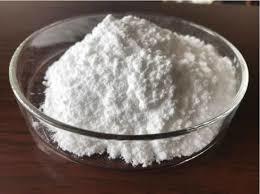
L- PROLINE
Price 1050.0 INR/ Kilograms
MOQ : 25 Units
L- PROLINE Specification
- Shelf Life
- 12 Months
- Storage
- Room Temperature
- CAS No
- 147-85-3
- Grade
- Food Grade
- Purity(%)
- 99%
- Physical Form
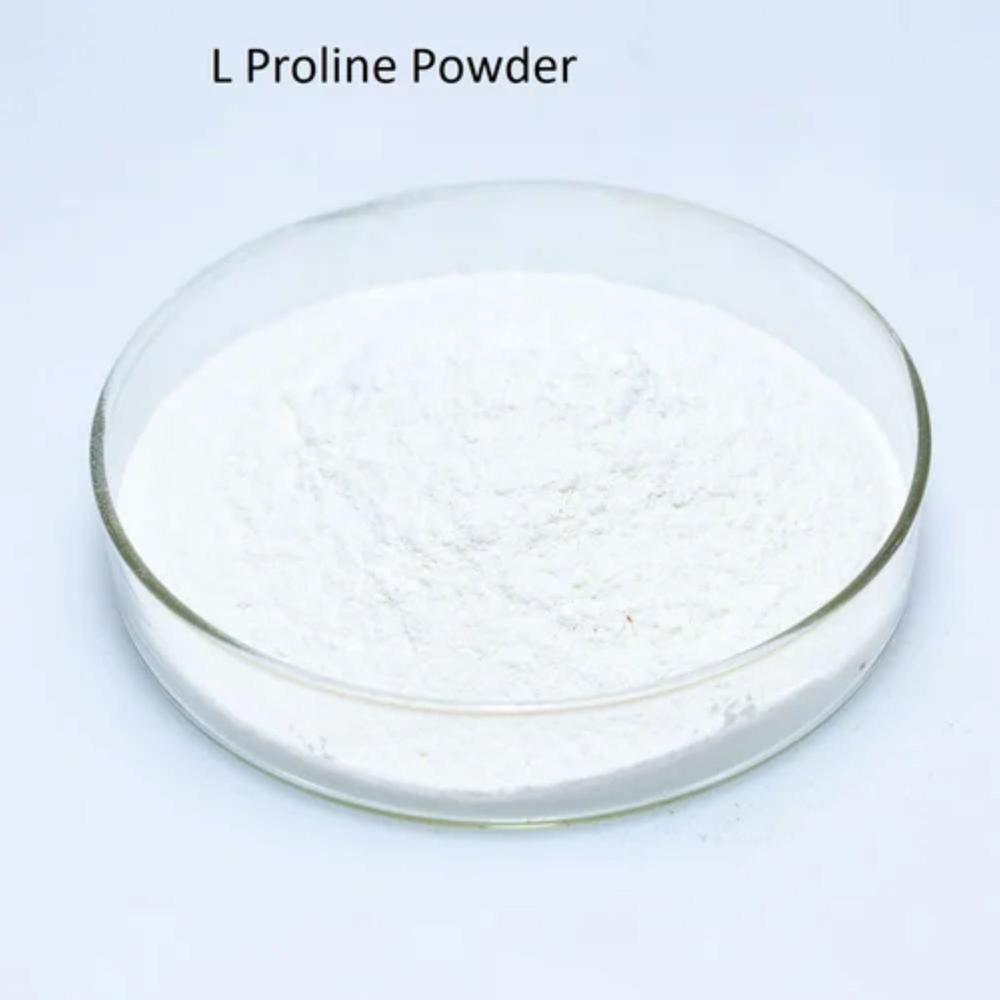
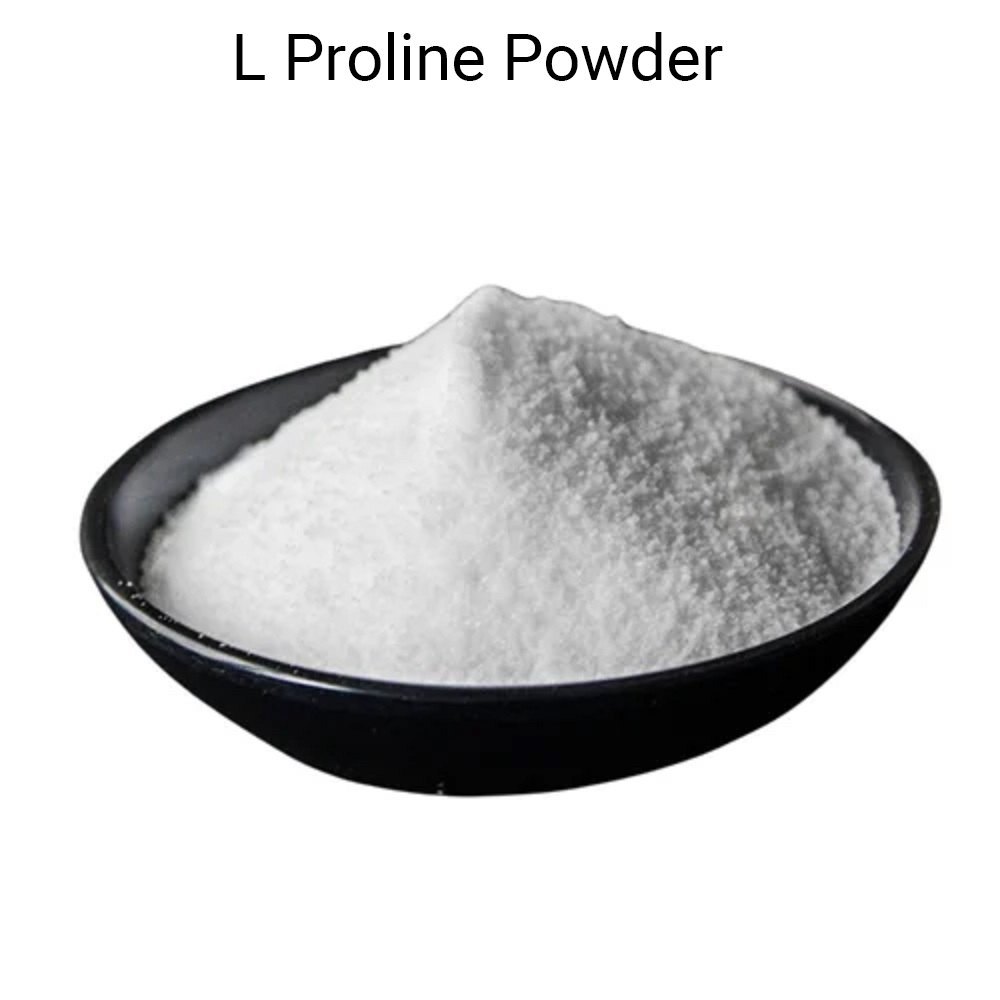
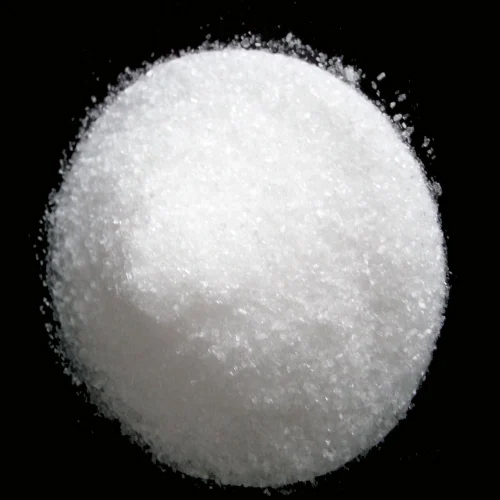
- Powder
- Shelf Life
- 2 years
- pH (1% solution)
- 5.86.2
- Storage Condition
- Store in cool, dry place, tightly sealed
- Loss on Drying
- 0.30%
- ISO Certification
- ISO 9001:2015
- Heavy Metals
- 10 ppm
L- PROLINE Trade Information
- Minimum Order Quantity
- 25 Units
- Supply Ability
- 200 Units Per Week
- Delivery Time
- 5 Days
L- PROLINE About
Specification
|
CAS No.: |
147-85-3 |
|
Synonyms: |
QCR-1; |
|
Formula: |
C5H9NO2 |
|
Exact Mass: |
115.06300 |
|
Molecular Weight: |
115.13000 |
Quality Assurance and Certification
Our L-Proline is certified under ISO 9001:2015, ensuring consistent product quality and safety. Rigorous purity (99%), controlled heavy metals (10 ppm), and loss on drying (0.30%) standards uphold reliability for food and pharmaceutical applications.
Applications in Pharmaceuticals and Food
L-Proline functions as a pharmaceutical intermediate, nutrition enhancer, and food additive. Its excellent solubility in water, stable pH (5.8-6.2 in 1% solution), and non-toxic profile make it suitable for diverse formulations, enhancing nutritional value and product stability.
Storage and Shelf Life Information
To maintain its optimal properties, L-Proline should be stored in a cool, dry place, tightly sealed to prevent moisture uptake. It has a shelf life of up to 2 years under recommended conditions, ensuring prolonged usability and potency.
FAQ's of L- Proline:
Q: How should L-Proline be stored to maintain its quality?
A: L-Proline should be kept tightly sealed in a cool, dry place. Proper storage reduces the risk of moisture absorption and maintains its shelf life of 2 years.Q: What are the benefits of using food-grade L-Proline in products?
A: Food-grade L-Proline enhances nutritional value, acts as a stabilizer in formulations, and meets strict safety standards due to low impurities and high purity, making it ideal for food and pharmaceutical applications.Q: Where is L-Proline commonly used in industries?
A: L-Proline is used in pharmaceutical manufacturing, food additives, nutrition supplements, and laboratory research-primarily as an intermediate, enhancer, or ingredient for nutritional value.Q: When does L-Proline expire, and how can its shelf life be maximized?
A: L-Proline has a shelf life of 2 years from the date of manufacture. Storing it in a cool, dry place with a tightly sealed container maximizes its longevity.Q: What process is involved in the production of L-Proline?
A: L-Proline is produced either through biosynthesis or chemical synthesis, ensuring high purity and compliance with ISO 9001:2015 standards for quality and safety.Q: How is L-Proline used in pharmaceutical formulations?
A: In pharmaceuticals, L-Proline serves as an intermediate for synthesizing active compounds. Its stable profile and solubility make it valuable in nutritional and therapeutic formulations.Q: What makes L-Proline advantageous over other amino acids in food and pharma sectors?
A: L-Proline's high purity, stable crystalline form, low heavy metal content, and slightly sweet taste make it an effective and versatile ingredient meeting international regulatory standards.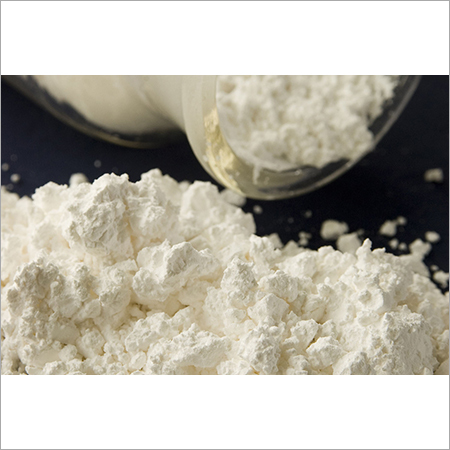
Tell us about your requirement

Price:
Quantity
Select Unit
- 50
- 100
- 200
- 250
- 500
- 1000+
Additional detail
Mobile number
Email

More Products in Amino Acid Category
L- ISO LEUCINE
Price 900.0 INR / Kilograms
Minimum Order Quantity : 25 Kilograms
Physical Form : Powder
Usage : Industrial
Purity(%) : 99%
Color : White
L-HISTADINE HCL MONO
Price 2100.0 INR / Kilograms
Minimum Order Quantity : 25 Units
Physical Form : Powder
Usage : Widely used as pharmaceutical intermediate, food additive, and nutrition enhancer
Purity(%) : 99%
Color : White
BCAA 2 1 1 Powder
Price 700.0 INR / Kilograms
Minimum Order Quantity : 25 Units
Physical Form : Powder
Usage : Nutritional Supplement
Purity(%) : 99%
Color : White
L ORNITHINE L ASPARTATE(LOLA)
Price 1250.0 INR / Kilograms
Minimum Order Quantity : 25 Units
Physical Form : Powder
Usage : Industrial
Purity(%) : 99%
Color : White

- AVANSCURE LIFESCIENCES PVT. LTD.
GST : 06AAKCA5222F1Z0
- 6th Floor, C-61, Super Mart Commercial Complex-I, Chakkarpur, DLF City, Phase IV, Gurugram - 122002, Haryana, India
- Phone :08045478142
- Send Inquiry
-
 Send Inquiry
- Mr Gagan Singh (Director)
- Mobile :08045478142


 |
AVANSCURE LIFESCIENCES PVT. LTD.
All Rights Reserved.(Terms of Use) Developed and Managed by Infocom Network Private Limited. |
